
HEY, HERE IS YOUR TYPOLOGY TEST RESULT.
Block 1.
Innate group.
(no principles + no straightness + generosity)
Affability is their need and obligation. Collective work is a pleasure for them and doing some good is a habit. These people are ready to support all other people inside of their country without any compensation. This is due to the fact, that they don’t have any innate needs in living a luxurious life. That is why, you may notice, that they are simple people, who don’t need a lot of wealth. They realize only the profit of living in united and wealthy country.
Virtue are the typical patriots, who create and preserve their own deep native culture and traditions. They respect the borders. A habit of doing good for people and animals is caused by the call of their soul and innate mentality.
Here is the list of their innate life preferences:
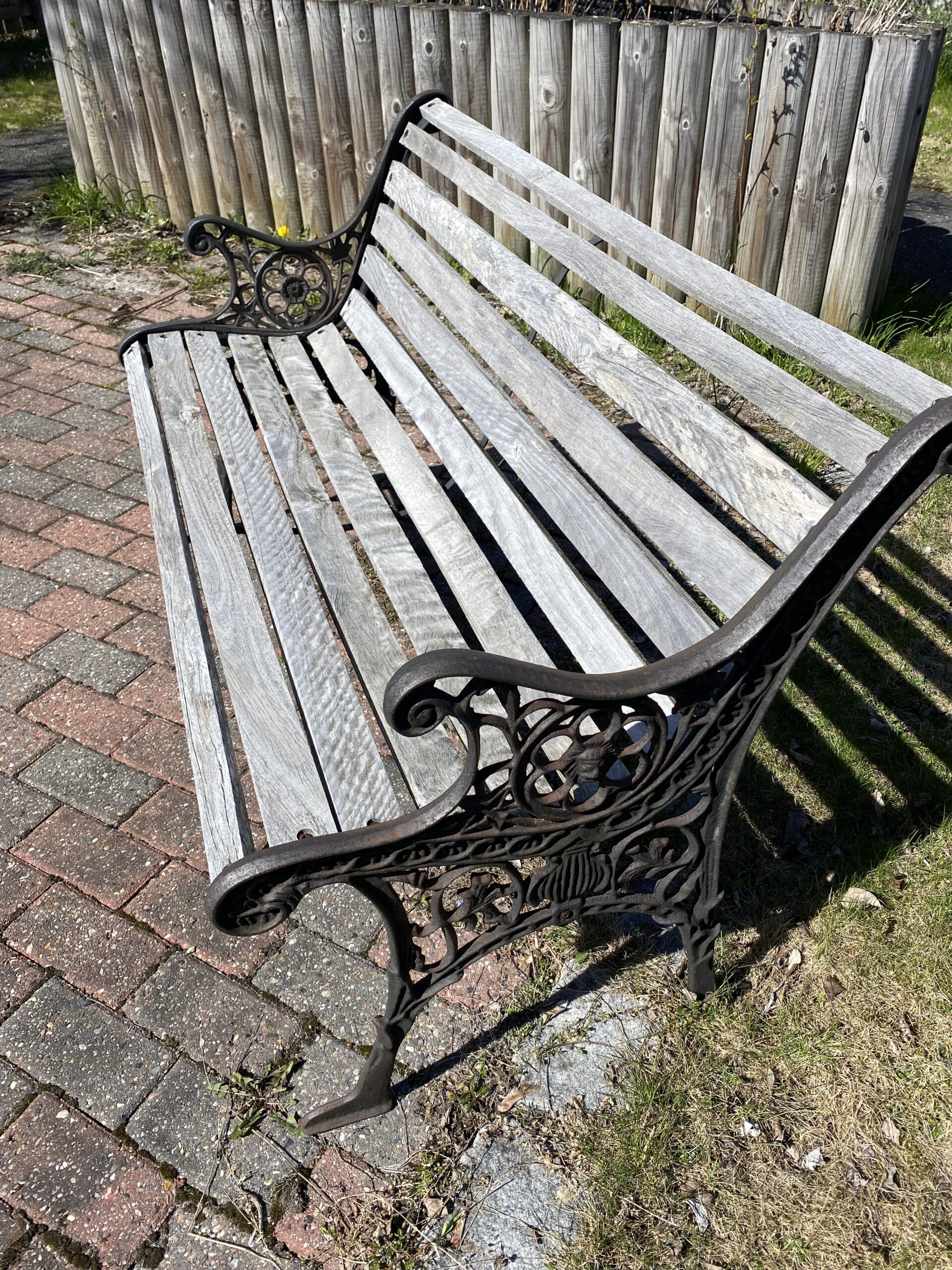
- they need a vegetable garden in order to grow their own plants and birds
- care for animals, availability of territory for animals and zoos
- the fences around the houses are prohibited and prohibition of buying a land for a private property, especially around forests, lakes, meadows and natural spots
- affability as a duty
- free rest camps for children
- all personal ideas, copyrights and patented inventions belong to the country and nation
- free general secondary education
- availability of diverse kids clubs (planting trees, art club, mosaic, dance club, construction etc.)
- connection of traditional architecture with church and traditions (all in one)
- work in public places: creating flowerbeds and its maintanence, creating mosaic and tiles on the street
- presence of pavement, flowerbeds and benches on the streets
- development and diversity of an agriculture market
- police that is on the side of people and nation. Such police should punish the violators of the national rights, spoiled and dishonest tourists and hooligans
- Ruler is like a chief who solves all the problems of his nation and country
- Virtue respects union with many countries but they want the strict saving of the national borders
- legalization of alcohol drinks
- low-rise houses (less than 3 story building) with balconies that have a view on the streets
- Virtue group prefers such architectural styles: Minimalist, Spanish, Italian, Chateau, Pombaline, Roman architecture, City-garden, Ethnic, Queenslander architecture, European, Japanese, Resort architecture
- prefers cash and barter as a payment

Block 2.
Temperament and category.
Assumed Temperament: Choleric.
Description of temperament:
incredulous, excitable, changeable, capricious, disturbing, impulsive, vulnerable, active, negative, unbalanced, unstable, categorical, spiteful, picky, pessimistic
1) ability to understand human relations – none
2) likes to read a lot – weak
3) ability to finish the job – weak
4) spiritually weak*
5) morally weak*
6) physically strong
7) emotions – strong
8) caring person for relatives and others
9) they have weak ethics to all people
10) they like cleanliness, but not healthy lifestyle
*Spiritually strong means that the negative thoughts and forebodings do not influence the condition of a person.
*Morally strong means that a person does not pay attention to provocations or an external pathogen.
*Spiritually weak means that the negative thoughts and forebodings influence the condition of a person.
*Morally weak means that a person pays attention to provocations or an external pathogen.
Innate category: Passive Patriot.
Another name for this category is 2P. These people are calm and silent patriots. Generous and law abiding. But they are dangerous for those who invades their territory. This is because they use different tactics and positions and sometimes can even make a friendship with their enemies. But deeply inside such people continue to be faithful to their country and keep their duties to the motherland. But that doesn’t mean yet that they will punish their enemy, because everything depends on the situation. This is the only category that may bring the lost territories back to their country in the future. Such people value and respect the borders of their country and national flag.
They love to work for their nation and country, as well as strengthen their muscles and spirit. Such people don’t leave others in trouble and prefer to be “in sorrow and joy together”. 2A category likes this proverb too. They can get mad at those who steals something from their country, who is hiding something or betray their homeland. 2A patriots have almost the same position. The “Union” is the idea of 2P, because they respect the freedom and territories of other nations and people, without changing the borders.
Block 3.
Innate type of thinking.
DTCT (Democratic Thinking Casuistic Type)
Type description:
A good fantasist. They are often upset, when their life ideas, thoughts and views are not real (melancholic, choleric). And such views may not become real in most cases. They create a charm and when they see the purpose they show their feelings and experiences to others. Creates any occasion in order to do his own goals and good (melancholic, phlegmatic, sanguine, choleric).
As a person he may be unreliable, because such people may forget about their obligations and life principles. But they don’t understand why somebody may dishonor them about it (melancholic, phlegmatic). Not indifferent to other people. Very often others remember DTCT as a good worker (for example, as paramedic) (sanguine). But usually DTCT is a good worker for others. When his or her family needs a help, such type prefers to avoid these duties (melancholic, phlegmatic, sanguine, choleric).
May be involved in conflicts and when others are quarreling (melancholic, choleric). Silent and passive patriot (melancholic, phlegmatic, sanguine, choleric). For self-defence uses his sympathy and calm emotions in order to end the conflict with aggressive people. They don’t have a feeling of guilt or responsibility towards people while they use self-defence. (melancholic, phlegmatic, sanguine, choleric).

Block 4.
Features of your personality:
Concrete thinking: 95%
It is a function that creates thought. Concrete thinking is continuous internal thoughs that create an image, play or manipulation. This needs in order to express the variety of feelings and affect someone.
Concrete casuistry: 68%
Concrete casuistry is created for more internal and precise level. In fact, it describes the words more precisely to build a quality dialogue or in order to play the role, express the feelings or create any scenario in relationship.
Abstract eyesight: 55%
Abstract eyesight in created for external level and sees the qualities of all facts. For example, the colour of skin or the style.
Abstract logic: 6%
Abstract logic means that it is created for external level. For example, target search in everything. That is why abstract logic allows connection between separate phenomena.
Abstract casuistry: 20%
Both concrete and abstract casuistry are the functions that “hide the trail”. On the other hand, the purpose of casuistic is to contact with people and to build relationships. So, human abstract casuistry is created for external level and may have an easy contact and relations with lots of people.
Concrete logic: 0%
A function that always builds a chain. The purpose of logic is to create a case on the basis of an existing things or to check the truth. Concrete logic is created for internal, more precise level. This logic is created for finding accurate connections and truth.
Concrete eyesight: 0%
The function that defines the detail. The main purpose of eyesight is people and truth. Concrete eyesight sees only the facts with a help of its sharpness.
Abstract thinking: 0%
Abstract thinking is created for external level. The task of abstract thinking is to look for perspective, future trends and his or her own talents.
Concrete or abstract person in overall: Concrete
Concrete person relies only on one object and works for a long time with one object without personal distraction.
Click here to find out what the percentages above mean.
Block 5.
Additional traits.
Aristocrat or democrat: Democrat
Aristocrat thinks about his reputation. In fact, he cares what others think of him. Therefore, he or she acts as their mind says or the need. Such people rely on what they need at the moment, and choose one of them. Theatricality. Want to distribute roles and the law of nature. Sharpened for balance. Thinks more about other people’s qualities and negative sides than about his own. So, if you choose people or an object, aristocrat will choose an object.
Democrat thinks about mental comfort. He doesn’t care what people think of him. His actions are based on his soul and mind. Therefore, such people value freedom and the right to choose. They can also claim equality and luck. To demonstrate, such person is obsessed with changes and demonstrates his or her strengths.
Innate color group: Green
Your innate color and group you probably genetically belong to.
Low or high self-esteem: High
Those who have high self-esteem have no doubt in their actions and relaxed in their behaviour. It may seem that these people already have everything in their life and they don’t need anything new. These people are not afraid to look uptidy or scruffy.
People who have innate low self-esteem always like to dress beautifully and constantly look after their appearance. These people need something new in their life and they are looking for it. But at the same time, they try to be restrained, shy and neat. People with low self-esteem often hesitate and might look unsure or narcissistic in the eyes of those who have stable high self-esteem.
Tendency to innate depression: No
Some people may have constant innate depression due to conflicts of their innate category and type. It looks like you don’t have it.
Block 6.
Personality markers:
Awareness \ Need
Idea \ Reticence
Optimist \ Pessimist
Objective \ Subjective
Self-realization \ Self-improvement
Variety \ Constancy \ Stability \ Activity
Brave in communication \ Shy in communication
Takes into account the nuances \ Doesn’t take into account the nuances
*information in bold or colored text relates to your personality. The explanation of terms can be found here.
Block 7.
The way you work.
At work, you:
Do not like to redo work, plans are carried out in connection with your emotions.
Do not allow defects in the work or redo them immediately, plans are carried out according to common sense.
Do not take jobs that do not fit into the norm of the work and which are not related to this work.
So that faster to achieve a result in work, you take work not according to the rules and principles, which often leads to the fact that it is necessary to correct or redo the results.
Suitable professions:
Waiter, artist, journalist, entertainer, editor of a scientific journal, literary scholar, chief livestock specialist, theater director, decorator, proofreader, confectioner, writer, chemist, taster, gardener, cameraman, nurse, lawyer, programmer, advertising manager, wood carver, journalist, musician, receptionist
Block 8.
Speech and communication.
In your speech and communication, you:
(only in colored text):
Do not process information in communication, immediately talk about what you think and expect from others the correct presentation of information from your point of view
Process and ponder information before speaking, you can think over different communication options and choose the most optimal option
Do not process information in communication, and do not get hung up on someone’s reaction to this information, believing that the main thing is the essence, and not how the information is presented
Process information before conversation, but only for your own purposes. You can provide information in the form of concern, care or comfort
In society, you are:
Sociable towards the conflict
Serious person ready to conflict
Sociable towards the compromise
Serious person ready to compromise
Block 9.
Aspects of your personality.
Your life’s usual mission:
Constant actions aimed at maintaining friendship with close friends and family members, as well as demanding the same from them in return. In other words, it is a desire and financial investment in your close circle in order to create strong long-term inseparable relationships with them.
Your recurring needs:
An acute periodic controlled desire to create provocations, a performance or show in order to change the emotional atmosphere in certain circles of people or society.
Your behavior in the outside world:
Periodic need to have something of one’s own free will and to satisfy one’s spontaneous desires with new people, depending on real opportunities and mood.
What spoils your mood or causes ignoring:
Fear, misunderstanding and avoidance of people who demand certain results from you in their understanding, as well as when these people openly evaluate your abilities, actions and the results of your work.

Block 10.
Housing location.
You would certainly choose:
Cozy layout and location of the house (convenient location of the house on the map near the center of large cities or inside them, layout of the corridor, bathroom, furniture)
Comfortable atmosphere inside the house and its location in a quiet place (upholstered furniture, free space, beautiful furniture and decor)
Nature. Your geography.
Places created for you by nature and where you would like to live forever:
Navlakhi (Gazharat, India), then east to Indore (India), from there southeast to Nagpur, then south to Machilipatnam, from there along the embankment to the northeast to Digha, from there north to Durgapur, Bhagalpur, then to west to Lucknow, Hisar, and southwest back to Navlakhi.
Click above on the “Your geography” link to see a map of the lands that also may suit your personality.

 World Typology